
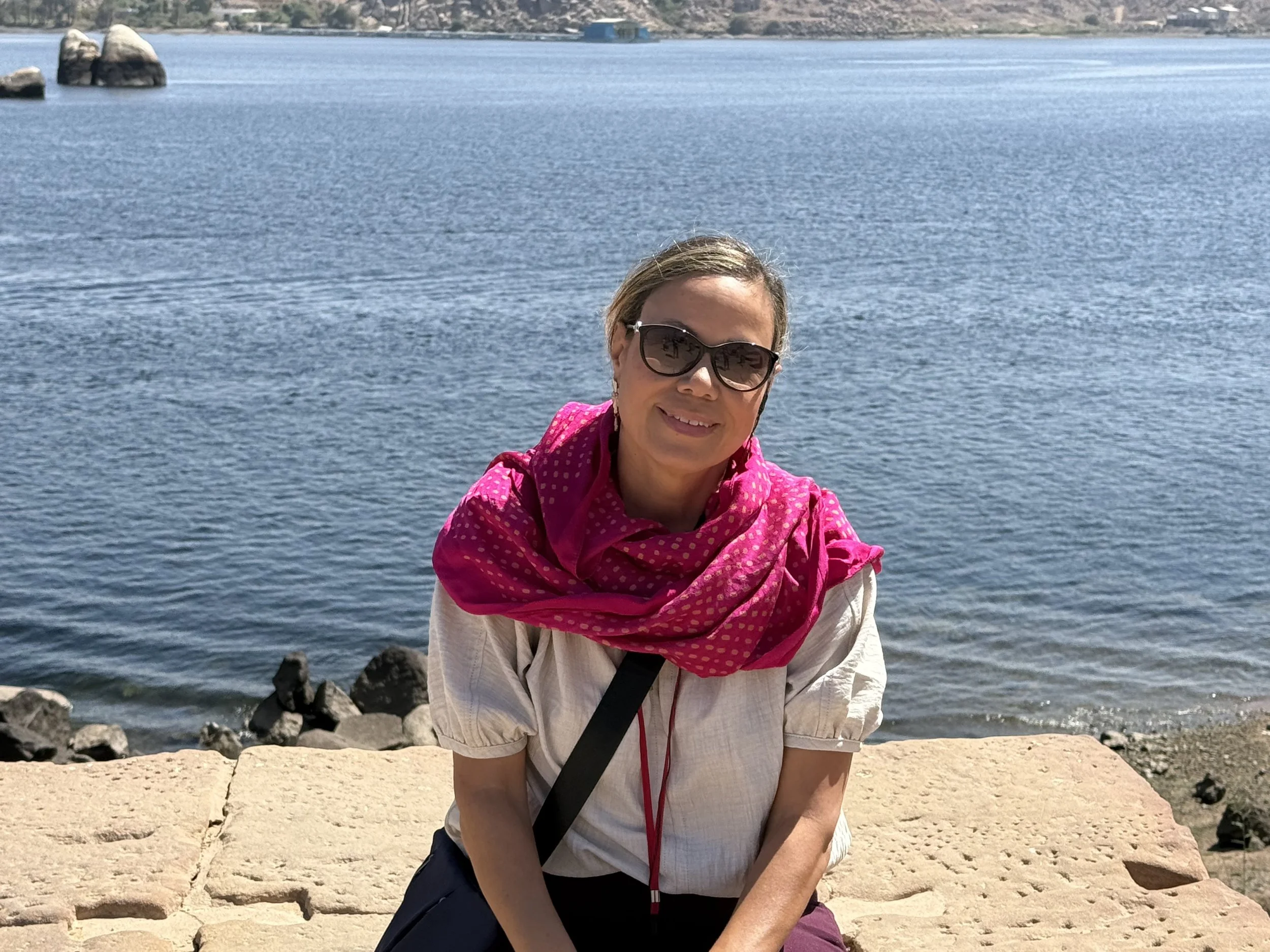
About Lisa
I’m a behavioral scientist, NIH-funded investigator, and NIH peer reviewer. I serve as Director of the Cancer Prevention Precision Control Institute at Hackensack Meridian Health and Deputy Associate Director for Community Outreach & Engagement at Georgetown Lombardi Comprehensive Cancer Center.
I’ve spent nearly two decades writing grants, reviewing grants, and studying the communication gaps that determine whether good science gets funded. My research sits at the intersection of cancer prevention, health communication, and community engagement—and it’s published in high-impact multidisciplinary journals.
I created the Lost in Translation grantsmanship curriculum because I kept seeing the same thing from both sides of the review table: brilliant scientists with important ideas whose grants failed—not because the science was weak, but because the translation was. They knew what they wanted to say. The words just didn’t come out right.
Personal story. I understand translation gaps because I’ve been navigating them my entire life. I was born in Kentucky at a time when my parents’ interracial marriage was still illegal in some states. A high school guidance counselor told me I shouldn’t go to college. I went anyway—and earned five degrees, including my PhD.
I became the first PhD-prepared nurse hired as an attending at Memorial Sloan Kettering Cancer Center—a role that had only ever gone to physicians. Every time someone told me to stay in my lane, I built a new one. That experience taught me something I now teach others: the gap between what you know and what others understand about you is where careers stall—and where grants die.
The work.Lost in Translation is a 14-module grantsmanship curriculum built around the Five Translation Gaps—the specific places where meaning gets lost between a scientist’s mind and a reviewer’s understanding. It’s aligned with the NIH 2025 Simplified Review Framework and designed for scientists writing R01, R21, R34 and K award applications.
Unlike traditional grantsmanship training that starts with templates and structure, this curriculum starts with clarity. The signature Coffee Conversation method helps you articulate your research in plain language before you ever touch a grant format—because if you can’t explain your work to a smart friend over coffee, a tired reviewer reading at 11 PM doesn’t stand a chance.
The curriculum is available as a self-paced course with lifetime access, as a guided 6-week cohort experience, and through institutional licensing for departments, training programs, and research offices.
What Participants Say
"I could not value these modules more. The first 4 modules have been immediately helpful to me in both doing a first draft of my K99 specific aims and editing a pilot grant specific aims." — Postdoctoral Fellow
"You wrote with much clarity. This module is very simple and can motivate anyone to start writing in plain language—not performing, over hedging, but just enough to communicate." — Professor of Public Health
"It felt like a whispered permission to start with my why and less the generic impact." — Associate Professor of Psychology, Director of a Research Institute
Beyond the Science
I also write about something quieter: the cost of performing yourself away from yourself, and the practice of return. If that resonates, you can find my personal essays on Substack.