
Lost In Translation
A Different Kind of NIH Grantsmanship Curriculum
Your science is strong. But if reviewers can’t follow it, it doesn’t get funded. This 14-module curriculum teaches you to close the gap between what you write and what reviewers understand.
See the Approach in Action
Module 1 is free.
Watch the video, work through the companion workbook, and find out where your grant draft starts performing instead of communicating.
Free. No credit card required.
Or, if you already know this is for you: [Enroll in the Full Curriculum →]
"It was enjoyable to go through, especially as a mentor. You hit on novel areas where many people struggle — regardless of career stage — around what is grant-writing skill versus working through your unique scientific direction. Each of those has unique barriers to address. Having a neutral, experienced person name those things is so helpful."— Suzanne C. O'Neill, PhD, Georgetown University
Good Science, Lost in Translation
Most grantsmanship training teaches templates. Fill in the structure. Use these phrases. Follow this format.
But the scientists who struggle most aren’t confused about format. They’re struggling with something deeper: the gap between their own thinking and their own writing. They know their science. But when they sit down to write, the words don’t come out right.
The grant gets triaged. Not because the science was weak. Because the translation failed.
Is This For You?
This curriculum is designed for:
Early career scientists and postdoctoral fellows preparing their first major NIH application
Junior faculty who have submitted before and not yet achieved funding
Mid-career investigators transitioning to new mechanisms or seeking to strengthen application clarity
Anyone who has received a summary statement that said their science was strong but the writing was unclear
You will get the most from this course if you have a grant in progress or an idea for one. The exercises are designed for application to your own work in real time.
Client Reviews
“This module is very simple and can motivate anyone to start writing in plain language — not performing, over-hedging, but just enough to communicate. That’s great.”
— Professor of Public Health
“This was profound and really hit home for me: ‘The first translation gap is not between you and your reviewers. It’s between your own thinking and your own writing.’ I love the concept of the coffee conversation.”
— Health Equity Leader, Foundation
“I have never seen a grant curriculum that considers the real context that we experience as early-stage investigators before diving into the content. I LOVE this aspect of the program.”
— Early-career Faculty Participant
Choose Your Starting Point
Find Out Where Your Grant Loses the Reviewer
The Five Translation Gaps Diagnostic Workbook — a 25-question self-assessment that scores you across the five gaps between your thinking and the reviewer's understanding. Identify your weakest points and build a targeted revision plan.
Lost in Translation: The Complete Grantsmanship Curriculum
14 video modules with comprehensive companion workbooks (265 pages).
Built on the Five Translation Gaps Framework.
Includes the K Module Extension.
Quick reference cards.
Lifetime access (including all future updates).
Aligned with the NIH 2025 Simplified Review Framework.
$497

Ready to Start?
First: Start Module 1 Free
Explore Free: Module 1 — The Return
Experience the Coffee Conversation method and see if this approach fits how you think about your writing. Watch the video, work through the companion workbook, and find out where your grant draft starts performing instead of communicating.
No cost. No commitment.
K-Award Module:
Writing a K Award? — $97
A comprehensive standalone module covering K01, K08, K23, K99/R00, and KL2 mechanisms. Includes the career development plan, the candidate section, the mentoring team argument, and a new translation gap specific to K applications: the gap between who you are and who reviewers see.
Designed to work on its own or alongside the full curriculum.
Second: The Complete Curriculum — $497
14 video modules with comprehensive companion workbooks (265 pages). The Five Translation Gaps Framework. The K Module Extension. Quick reference cards. Lifetime access (including future updates). Aligned with the NIH 2025 Simplified Review Framework.
Apply the framework to your own grant, module by module.
Payment plan available over 3 months.
R01 Translation Review:
R01 Translation Review — $1,500
A 60-minute strategy call plus a written diagnostic assessment of your Specific Aims and Research Strategy. I review your application through the Five Translation Gaps framework and tell you exactly where your grant is losing the reviewer — and how to close each gap.
Limited availability: 2–3 engagements per month.
Email Dr. Carter-Bawa directly at lisa@soultosoulleadership.com
Institutional:
Bringing This to Your Institution?
Institutional programs are available for departments, cancer centers, CTSA programs, and postdoctoral training offices. Options range from self-paced cohort access to the live Translation Intensive with six weeks of facilitated coaching on real applications.
Email Dr. Carter-Bawa directly at lisa@soultosoulleadership.com
Five Translation Gaps. One Curriculum.
Every grant application must cross five translation gaps between your mind and the reviewer’s understanding. Fail at any one, and the message gets lost. This curriculum addresses each gap in sequence:
-
Plain speech before templates
-
Language that connects vs. distances
-
Architecture that builds comprehension
-
Evidence of rigor and feasibility
-
Equipping reviewers to fight for you in the room
Want a preview of the approach before diving in? Listen to a 16-minute overview of the Five Translation Gaps framework and how it changes the way you think about grant writing.
14 Modules. 13 Workbooks. One Complete System.
The curriculum walks you from plain speech to polished proposal in six weeks (at your own pace). Each module includes a video lesson and a companion workbook with exercises designed for immediate application to your own grant.
-
Plain speech before templates; the Coffee Conversation method
-
Language that connects vs. distances; person-first thinking
-
Four-paragraph structure; the hourglass shape
-
The first 30 seconds; creating goodwill vs. friction
-
NIH 2025 Simplified Review Framework
-
Writing from confidence, not apology
-
Rigor, power analysis, feasibility as trust deposits
-
Significance, Innovation, and Approach as one argument
-
Equipping reviewers to fight for you in the room
-
Partnerships as scientific infrastructure
-
R01 vs. R21 vs. R34; the ladder strategy
-
Reading summary statements; persisting with integrity
-
K applications introduce something the R-series does not require: you have to translate yourself.
-
Build the two-sentence summary a reviewer would use to argue for you in study section
Aligned with the NIH 2025 Simplified Review Framework. Designed for R01, R21, R34 and K mechanisms.
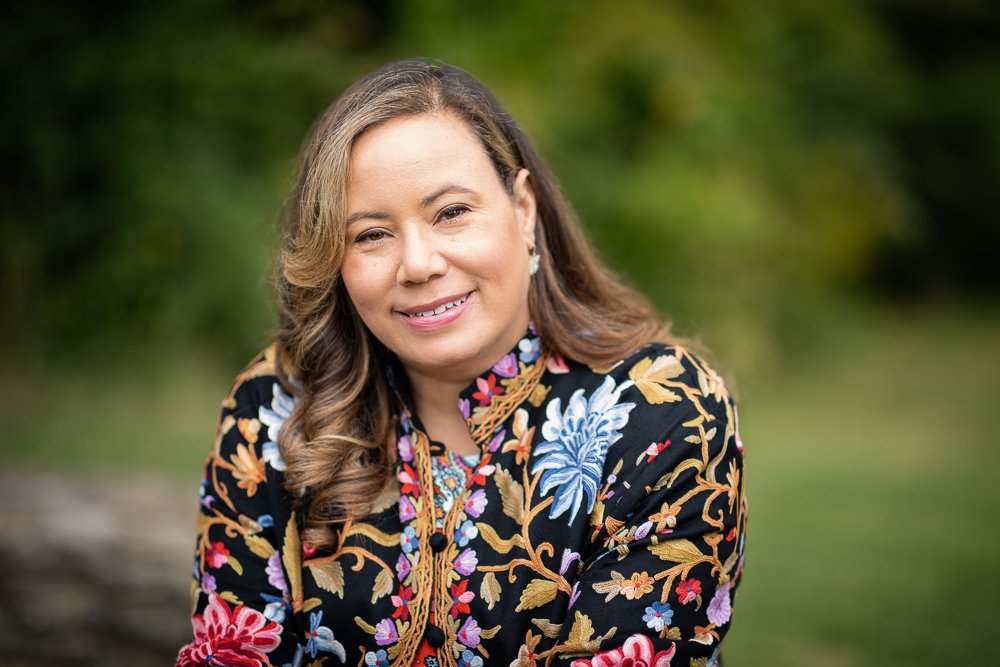
I'm Dr. Lisa Carter-Bawa—a behavioral scientist, nurse practitioner, and researcher who has spent my career at the intersection of science, communication, and implementation. I've written grants that got funded. I've written grants that didn't. I've sat on review panels and watched brilliant science fail to land—not because the ideas weren't strong, but because something got lost in translation between the researcher's vision and the page. That gap is what this course addresses. After years of mentoring early career scientists, I developed this curriculum to teach what I wish someone had taught me: that grantsmanship isn't about performing for reviewers or following a formula. It's about returning to your authentic scientific voice and learning to communicate it with clarity and conviction. You don't need reinvention. You need a return. I'm honored to be part of your journey.
Meet Your Instructor
Institutional and Group Programs
Bring Lost in Translation to your department, cancer center, CTSA program, or postdoctoral training office.
Institutional programs include structured cohort access, a kickoff orientation, pacing guides, and completion reporting — designed to integrate with your existing professional development infrastructure. Self-paced and live-facilitated options available for R-series and K-award training.
Currently in use at Mayo Clinic (iCCaRE Consortium), Georgetown Lombardi Comprehensive Cancer Center, and Hackensack Meridian Health.